
In Florida, the phrase “exempt from probate” covers two different things, and mixing them up is the single most common reason families are surprised by what a probate court actually does. The first meaning is assets that never enter probate at all, because they pass by contract or by title the moment someone dies: jointly held property with survivorship rights, pay-on-death bank accounts, transfer-on-death securities, life insurance and annuities with a living named beneficiary, retirement accounts with a living named beneficiary, and property already titled in a revocable living trust. The second meaning is “exempt property” under Fla. Stat. §732.402, which is a specific list that does go through the estate but is protected from creditors and set aside for the surviving spouse or children: household furniture, furnishings and appliances up to a net value of $20,000, two qualifying motor vehicles, Florida Prepaid and other section 529 college plans, and death benefits paid under Fla. Stat. §112.1915.
Homestead sits in a third category of its own, and the answer there is more nuanced than most articles admit. This guide walks through all three, cites the statute behind each item, and covers the small-estate thresholds that changed under Florida law on July 1, 2026.

Key Takeaways
- Assets with a surviving joint owner, a living named beneficiary, or trust title generally pass outside probate entirely. Nothing about them is filed with the probate court.
- “Exempt property” under Fla. Stat. §732.402 is different. It is part of the estate, but it is exempt from all claims against the estate except perfected security interests.
- Exempt property is waived unless a petition is filed on or before the later of 4 months after service of the notice of administration or 40 days after termination of a proceeding over the will.
- Protected homestead is exempt from forced sale by most creditors under Art. X, §4 of the Florida Constitution, but it is usually not exempt from the probate process. Clearing title normally still takes a court order.
- Chapter 2026-57, Laws of Florida, effective July 1, 2026, raised the summary administration ceiling from $75,000 to $150,000 and raised three other small-estate thresholds.
- Exempt property and other creditor-exempt assets are subtracted before the summary administration ceiling is applied, so estates larger than $150,000 on paper can still qualify.
The Two Meanings of “Exempt from Probate”
When someone asks which assets are exempt from probate in Florida, they are usually asking one of two questions without realizing they are separate.
The first question is about non-probate assets. These are assets that transfer at death by their own terms. A pay-on-death account belongs to the named beneficiary the moment the last account holder dies, under Fla. Stat. §655.82(3)(b). A security registered in transfer-on-death form passes “by reason of the contract regarding the registration between the owner and the registering entity,” and Fla. Stat. §711.509(1) says outright that the transfer “is not testamentary.” None of these assets are inventoried, none are distributed by a personal representative, and none are used to pay estate creditors in the ordinary case. If every asset a person owns is of this type, there may be no probate proceeding at all.
The second question is about exempt property, a defined term in the Florida Probate Code. Fla. Stat. §732.402 gives the surviving spouse, or the decedent’s children if there is no surviving spouse, the right to a specific share of the estate designated “exempt property.” This property is inside the estate. It gets inventoried. But under §732.402(3) it is “exempt from all claims against the estate except perfected security interests thereon,” and under §732.402(7) it is excluded from the value of the estate before residuary, intestate, pretermitted, or elective shares are determined.
The practical difference matters. A non-probate asset requires a death certificate and a claim form sent to a bank or an insurer. Exempt property requires a petition filed with the probate court within a deadline, and the right is lost if nobody files it.
Assets That Pass Outside Probate Entirely
These are the categories that skip the estate. In each case, the transfer happens because of how the asset is titled or who is named on it, not because of anything a will says. A will has no effect on any of them.
| Asset type | Why it bypasses probate | Authority |
|---|---|---|
| Tenancy by the entirety (property held by spouses) | The surviving spouse takes the whole interest by operation of law. Fla. Stat. §732.401(5) states that the homestead descent rules do not apply to entireties property at all | Fla. Stat. §732.401(5); §731.201(33) |
| Joint tenancy with right of survivorship | The interest passes to the surviving joint owner or owners. Florida’s homestead descent rules expressly do not reach this property, and the Probate Code excludes it from the definition of protected homestead | Fla. Stat. §732.401(5); §731.201(33) |
| Joint bank accounts | A deposit account in two or more names is presumed to vest in the survivors at death. An account in the names of two spouses is treated as a tenancy by the entirety unless the paperwork says otherwise | Fla. Stat. §655.79(1) |
| Pay-on-death (POD) accounts | On the death of the sole party or the last surviving party, the funds belong to the surviving beneficiaries | Fla. Stat. §655.82(3)(b) |
| Transfer-on-death (TOD) securities | Registration in beneficiary form is effective by contract and “is not testamentary” | Fla. Stat. §§711.50 to 711.512; §711.509(1) |
| Life insurance with a living named beneficiary | Proceeds inure exclusively to the named beneficiary and are exempt from the insured’s creditors unless the policy provides otherwise | Fla. Stat. §222.13(1) |
| Annuity contracts | A named beneficiary takes by contract, and the proceeds of annuity contracts issued to Florida residents are separately shielded from attachment, garnishment, or legal process in favor of any creditor of the person whose life is insured or of the beneficiary of the contract | Fla. Stat. §222.14; §733.808 |
| Retirement accounts with a living named beneficiary | Money in an IRA, 401(k), 403(b), 457(b) or similar tax-qualified plan is exempt from creditor claims, and §222.21(2)(c) confirms the exemption does not end at the owner’s death on a rollover to an inherited IRA | Fla. Stat. §222.21(2) |
| Death benefits payable to a trust | Life insurance, annuity, endowment, and health or accident proceeds paid to a trustee are not deemed part of the decedent’s estate and are not subject to estate administration expenses, unless the trust or will expressly opts out | Fla. Stat. §733.808(4) |
| Assets titled in a revocable living trust | The trustee already holds title, so there is nothing for a personal representative to collect. This is not absolute creditor protection: under Fla. Stat. §733.707(3), a revocable trust remains liable for administration expenses and estate obligations to the extent the estate itself is insufficient | Trust instrument; Fla. Stat. §733.707(3) |
| Homestead transferred during life by enhanced life estate deed | An inter vivos transfer where the owner keeps no power to revoke or revest the interest is not a devise and does not descend under §732.401 | Fla. Stat. §732.4017(1) |
Two cautions belong with that list. First, a beneficiary designation only works if the beneficiary is alive and identified. Fla. Stat. §222.13(1) says that when life insurance is payable to the insured, the insured’s estate, or the insured’s executors, administrators, or assigns, the proceeds “shall become a part of the insured’s estate for all purposes” and are administered like any other estate asset. The same logic applies when every named beneficiary has predeceased and no contingent beneficiary is named. A designation that has gone stale converts a non-probate asset into a probate asset.
Second, passing outside probate is not the same as passing free of every claim. Fla. Stat. §711.509(2) states plainly that the transfer-on-death sections “do not limit the rights of creditors of security owners against beneficiaries and other transferees under other laws of this state.” And Fla. Stat. §222.21(2)(d) carves retirement accounts out of their own exemption when a surviving spouse obtains an order determining an elective share, or when an alternate payee holds a qualified domestic relations order. Exempt from probate and exempt from everyone are different propositions.
Exempt Property Under Fla. Stat. §732.402
This is the statutory list most people are actually looking for when they search for exempt property in a Florida estate. It applies when the decedent was domiciled in Florida at the time of death. The right belongs to the surviving spouse, or, if there is no surviving spouse, to the decedent’s children.
| Category | Limit or condition |
|---|---|
| Household furniture, furnishings, and appliances | Located in the decedent’s usual place of abode, up to a net value of $20,000 as of the date of death |
| Motor vehicles | Two motor vehicles as defined in Fla. Stat. §316.003, neither exceeding 15,000 pounds gross vehicle weight, held in the decedent’s name and regularly used by the decedent or immediate family as personal vehicles |
| Qualified tuition programs | All section 529 plans, including Florida Prepaid College Trust Fund advance payment contracts and participation agreements |
| Section 112.1915 death benefits | All benefits paid under the statute covering teachers and school administrators killed as the result of an unlawful and intentional act of violence |
Four rules govern how the list operates, and each one comes straight from the statute.
It is protected from creditors, with one exception. Section 732.402(3) makes exempt property “exempt from all claims against the estate except perfected security interests thereon.” A car with an outstanding loan is still subject to the lender’s lien. The exemption protects the property from general estate creditors, not from a creditor who already holds security in the specific item.
It is on top of everything else. Section 732.402(4) says exempt property is in addition to protected homestead, statutory entitlements, and whatever passes under the will or by intestate succession. A surviving spouse does not choose between exempt property and an inheritance.
A specific devise pulls property off the list. Under §732.402(5), property specifically or demonstratively devised by the will to a devisee is not included in exempt property. If a will leaves the dining room set to a named person, that furniture is no longer available as exempt property in the ordinary case, although a devisee who would otherwise have been entitled to claim it may still ask the court to determine it exempt from claims after following the petition procedure.
There is a hard deadline. Section 732.402(6) provides that the people entitled to exempt property “shall be deemed to have waived their rights” unless a petition is filed on or before the later of 4 months after the date of service of the notice of administration, or 40 days after the termination of any proceeding involving the construction, admission to probate, or validity of the will. This is the provision that costs families money. The property does not vanish, but it stops being protected and simply becomes part of the estate available to creditors and to the residuary beneficiaries.
Is Homestead Property Exempt from Probate in Florida?
Partly. Protected homestead is exempt from creditors. It is generally not exempt from the probate process, and that distinction catches families off guard when they try to sell the house.
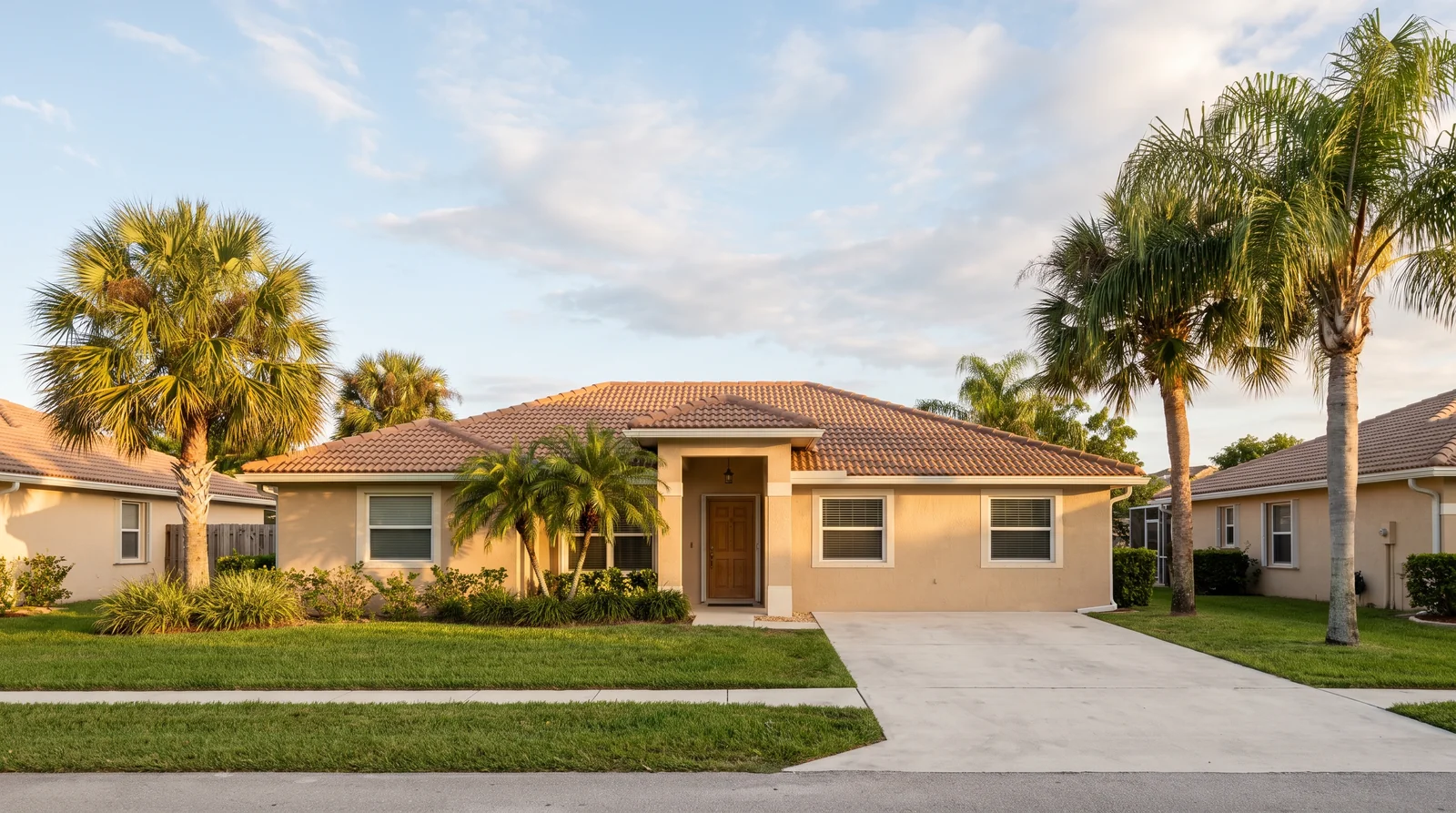
Article X, §4(a)(1) of the Florida Constitution exempts homestead from forced sale, and bars any judgment, decree, or execution from becoming a lien on it, with three exceptions written into the text: taxes and assessments on the property, obligations contracted for its purchase, improvement, or repair, and obligations contracted for house, field, or other labor performed on the realty. The protected acreage is up to 160 contiguous acres outside a municipality, or one-half acre of contiguous land inside a municipality, where the exemption is limited to the residence of the owner or the owner’s family. Article X, §4(b) then provides that these exemptions “shall inure to the surviving spouse or heirs of the owner,” which is what carries the creditor protection across death.
Two more constitutional and statutory rules shape who gets it. Article X, §4(c) and Fla. Stat. §732.4015(1) prohibit devising homestead if the owner is survived by a spouse or a minor child, except that it may be devised to the spouse when there is no minor child. When homestead is not validly devised and the decedent leaves a spouse and one or more descendants, Fla. Stat. §732.401(1) gives the surviving spouse a life estate with a vested remainder to the descendants living at the decedent’s death, per stirpes. Under §732.401(2), the spouse may instead elect an undivided one-half interest as a tenant in common, and §732.401(2)(b) requires that election to be made within 6 months after the decedent’s death and during the spouse’s lifetime. Once made, §732.401(2)(d) makes it irrevocable.
Here is why homestead usually still involves the court. Fla. Stat. §733.607(1) gives the personal representative a right to take possession of the decedent’s property “except the protected homestead,” so the personal representative cannot simply convey it. Homestead status is a legal conclusion about the property and the family, not a checkbox. Fla. Prob. R. 5.405 exists for exactly this purpose: an interested person files a verified petition to determine the protected homestead status of the real property, the petition is served on interested persons by formal notice, and the court enters an order that describes the property, determines whether it was protected homestead, and identifies by name the persons entitled to it and the interest of each. Title insurers and buyers generally want that order before closing.
One more definitional trap. Fla. Stat. §731.201(33) defines protected homestead by reference to the constitutional provision, then adds that “real property owned in tenancy by the entireties or in joint tenancy with rights of survivorship is not protected homestead” for purposes of the Probate Code. A married couple’s home held as tenants by the entirety passes to the surviving spouse outright and is not analyzed as protected homestead at all. That is a cleaner result, and it is the reason the two categories should never be collapsed into one.
Family Allowance and the Constitutional Personal Property Exemption
Two smaller protections round out the picture, and both are easy to overlook.
Family allowance. Fla. Stat. §732.403 provides that, in addition to protected homestead and statutory entitlements, the surviving spouse and the lineal heirs the decedent was supporting or was obligated to support are entitled to a reasonable allowance in money out of the estate for maintenance during administration. The court may order it as a lump sum or in installments, and the statute caps it: “The allowance shall not exceed a total of $18,000.” The statute also says the family allowance is not chargeable against any benefit or share otherwise passing to the surviving spouse or dependent lineal heirs unless the will provides otherwise. In an administration that runs many months, this is the provision that keeps a household running while assets are frozen.
The constitutional $1,000. Article X, §4(a)(2) of the Florida Constitution exempts “personal property to the value of one thousand dollars” from forced sale, and §4(b) inures that exemption to the surviving spouse or heirs alongside the homestead exemption. The figure has not been adjusted, and it is small, but it is a separate constitutional protection from the §732.402 statutory list, and Fla. Stat. §735.301(1) and §735.304(1) both reference constitutionally exempt personal property independently of statutory exempt property.
What Changed on July 1, 2026
The exempt property list in §732.402 was not amended in 2026. What did change are the thresholds that decide whether a family can use a simplified procedure instead of a full administration, and those thresholds interact directly with the exemptions above.
Chapter 2026-57, Laws of Florida, enacted as CS/HB 1337, was approved by the Governor on April 29, 2026 and took effect July 1, 2026. Alongside changes to safe-deposit box access and personal representative authority, it raised four small-estate figures.
The summary administration change is the one that matters most here, and the reason is in the wording of the statute rather than the number. Fla. Stat. §735.201(2), as amended, allows summary administration when “the value of the entire estate subject to administration in this state, less the value of property exempt from the claims of creditors, does not exceed $150,000.” Protected homestead and statutory exempt property come off the top before the ceiling is applied. A Florida estate consisting of a $400,000 protected homestead, a $25,000 car and household contents claimed as exempt property, and $90,000 in a bank account can fall under the ceiling even though the gross figure is well above it. Summary administration is also available regardless of value when the decedent has been dead for more than 2 years.
The other three changes are narrower. Fla. Stat. §735.304, which applies only when a decedent died intestate and has been deceased more than 1 year, now covers nonexempt personal property up to $20,000 rather than $10,000, plus preferred funeral expenses and reasonable and necessary medical and hospital expenses of the last 60 days of the last illness. Fla. Stat. §735.303 now lets a financial institution pay out a decedent’s qualified accounts to a family member without any court proceeding when the combined total does not exceed $2,000, and no earlier than 6 months after the death. Fla. Stat. §735.302 raised the federal income tax overpayment that may be refunded directly to a surviving spouse or child to $5,000.
Note that Fla. Stat. §735.301, the general disposition without administration provision, was not amended. It has no dollar ceiling of its own. It applies when a decedent left only exempt personal property under §732.402, constitutionally exempt personal property, and nonexempt personal property worth no more than the preferred funeral expenses plus the last 60 days of medical and hospital expenses.
What Is Not Exempt
The list of what does not qualify is shorter, and it accounts for most of the assets that end up in a formal administration.
| Asset | Why it is not exempt |
|---|---|
| Bank account in the decedent’s sole name, no POD beneficiary | A probate asset. §655.82(4) also makes a POD designation ineffective in a multiple-party account without right of survivorship. |
| A third vehicle, or one over 15,000 lbs gross vehicle weight | §732.402(2)(b) allows two, and each must be at or under 15,000 pounds. |
| Real property that is not homestead | Rental property, vacant land, and a second home get no constitutional homestead protection. |
| An interest held as a tenant in common | No survivorship right, so the decedent’s fractional share is a probate asset. |
| Household contents above the $20,000 net value cap | The cap is in §732.402(2)(a). Items specifically or demonstratively devised are excluded by §732.402(5). |
| Insurance or retirement proceeds payable to the estate | Under §222.13(1) insurance payable to the insured’s estate becomes part of the estate for all purposes. |
| Exempt property that nobody claimed in time | The §732.402(6) deadline is a waiver provision, not a formality. |
- A bank account in the decedent’s sole name with no POD beneficiary. It is a probate asset. Fla. Stat. §655.82(4) also makes a pay-on-death designation ineffective in a multiple-party account without right of survivorship, so an account designated as a tenancy in common does not deliver the POD result the owner expected.
- A third vehicle, or a vehicle over the weight limit. Section 732.402(2)(b) allows two, and each must be at or under 15,000 pounds gross vehicle weight. A work truck above that weight does not qualify.
- Real property that is not homestead. Rental property, vacant land, and a second home get no constitutional homestead protection and pass through the estate in the ordinary way.
- An interest held as a tenant in common. There is no survivorship right, so the decedent’s fractional share is a probate asset.
- Household contents above the $20,000 net value cap, and any item that the will specifically or demonstratively devises to someone, under §732.402(5).
- Insurance and retirement proceeds payable to the estate. Under §222.13(1), insurance payable to the insured’s estate becomes part of the estate for all purposes and is administered by the personal representative.
- Exempt property that nobody claimed in time. The §732.402(6) deadline is a waiver provision, not a formality.
How Exempt Property Is Actually Claimed
Non-probate assets are collected directly. The beneficiary contacts the bank, insurer, or plan administrator, supplies a certified death certificate and the institution’s claim form, and the asset is released. Nothing is filed with the probate court.
Statutory exempt property runs through the court. Fla. Prob. R. 5.406 allows an interested person to file a petition to determine exempt property within the time allowed by law. The petition must be verified, must describe the property and the basis on which it is claimed as exempt, and must state the name and address of the surviving spouse or, if there is none, the names and addresses of the children entitled to it, including the year of birth of any who are minors. The court then determines each item of exempt property and its value where value matters to the exempt status, and orders the property surrendered to the persons entitled to it.
The sequencing is what trips people up. The §732.402(6) clock is usually measured from service of the notice of administration, which happens early in the case, while families are still gathering documents. A surviving spouse who waits to see how the administration turns out before deciding whether to claim the household furnishings and the vehicles can find that the window has closed. The safer practice is to identify exempt property when the inventory is being prepared and to file the petition well inside the deadline.
Protected homestead follows the separate path described above under Fla. Prob. R. 5.405, and the surviving spouse’s election under §732.401(2) has its own 6 month deadline that runs from the date of death rather than from any filing.

Frequently Asked Questions
What assets are exempt from probate in Florida?
Two separate groups. Assets that never enter probate include property held as tenants by the entirety or in joint tenancy with right of survivorship, joint and pay-on-death bank accounts under Fla. Stat. §655.79 and §655.82, transfer-on-death securities under Fla. Stat. §§711.50 to 711.512, life insurance and annuities with a living named beneficiary, retirement accounts with a living named beneficiary, death benefits payable to a trust under Fla. Stat. §733.808(4), and assets already titled in a revocable living trust. Separately, Fla. Stat. §732.402 designates “exempt property” inside the estate: household furniture, furnishings and appliances up to a net value of $20,000, two qualifying motor vehicles, section 529 college plans including Florida Prepaid, and benefits paid under Fla. Stat. §112.1915.
Is homestead property exempt from probate in Florida?
Protected homestead is exempt from forced sale by most creditors under Art. X, §4(a) of the Florida Constitution, and §4(b) inures that protection to the surviving spouse or heirs. It is generally not exempt from the probate process itself. Fla. Stat. §733.607(1) says the personal representative has a right to possession of estate property “except the protected homestead,” so the property cannot simply be conveyed by the estate. In most cases an interested person files a petition under Fla. Prob. R. 5.405 and the court enters an order determining that the property was protected homestead and identifying who is entitled to it. Title companies generally want that order before a sale closes.
What is “exempt property” under Fla. Stat. §732.402?
It is a defined share of a Florida estate that belongs to the surviving spouse, or to the decedent’s children if there is no surviving spouse, when the decedent was domiciled in Florida at death. It consists of household furniture, furnishings and appliances in the decedent’s usual place of abode up to a net value of $20,000 as of the date of death; two motor vehicles as defined in Fla. Stat. §316.003 that each weigh no more than 15,000 pounds gross vehicle weight and were regularly used by the decedent or immediate family; all section 529 qualified tuition programs; and all benefits paid under Fla. Stat. §112.1915. Under §732.402(3) it is exempt from all claims against the estate except perfected security interests, and under §732.402(4) it is in addition to protected homestead and anything passing under the will or by intestate succession.
How long do you have to claim exempt property in a Florida estate?
Fla. Stat. §732.402(6) provides that the persons entitled to exempt property are deemed to have waived their rights unless a petition for determination of exempt property is filed on or before the later of two dates: 4 months after the date of service of the notice of administration, or 40 days after the termination of any proceeding involving the construction, admission to probate, or validity of the will. If the deadline passes, the property is not lost, but it stops being exempt and becomes ordinary estate property available to creditors and to the beneficiaries who take under the will or by intestacy.
Are life insurance and retirement accounts exempt from probate in Florida?
Generally yes, when a living beneficiary is named. Fla. Stat. §222.13(1) provides that life insurance inures exclusively to the person named in the policy and that the proceeds are exempt from the claims of the insured’s creditors unless the policy provides otherwise. Fla. Stat. §222.21(2) exempts money and assets in tax-qualified retirement funds and accounts from creditor claims, and §222.21(2)(c) confirms the exemption survives the owner’s death on a rollover to an inherited IRA. Two limits apply. Under §222.13(1), insurance payable to the insured’s estate or to the insured’s executors or administrators becomes part of the estate and is administered by the personal representative. And under §222.21(2)(d), a retirement account is not exempt from an order determining a surviving spouse’s elective share or from an alternate payee under a qualified domestic relations order.
What is the small estate limit in Florida in 2026?
Chapter 2026-57, Laws of Florida, enacted as CS/HB 1337 and effective July 1, 2026, raised the summary administration ceiling in Fla. Stat. §735.201(2) from $75,000 to $150,000. The statute measures the value of the entire estate subject to administration in Florida less the value of property exempt from the claims of creditors, so protected homestead and statutory exempt property come off the top before the ceiling is applied. Summary administration is also available regardless of value when the decedent has been dead for more than 2 years. The same act raised the Fla. Stat. §735.304 intestate small estate figure from $10,000 to $20,000, the Fla. Stat. §735.303 bank payout figure from $1,000 to $2,000, and the Fla. Stat. §735.302 federal tax refund figure from $2,500 to $5,000.
Every estate is assembled differently, and the difference between an asset that passes by beneficiary designation and one that has to be administered often comes down to a single line on a form signed years earlier. If you are sorting out what is and is not part of a Florida estate, contact The MTM Law Firm to talk through the specific assets. You may also want to read our overview of how Florida probate works, our guide to the Florida small estate affidavit, and our explanation of how long Florida probate takes.
For the procedure itself rather than the asset categories, see our guide to Florida summary administration, which walks through the Fla. Prob. R. 5.530 petition, the creditor search required by Fla. Stat. §735.206(2), and when formal administration is the better route.