
Summary administration is Florida’s shortened probate procedure. It ends in a single court order that assigns the decedent’s probate assets directly to the people entitled to them, and unlike formal administration it never appoints a personal representative. Under Fla. Stat. §735.201, an estate reaches that procedure through one of two doors: either the value of the entire estate subject to administration in Florida, less the value of property exempt from the claims of creditors, does not exceed $150,000, or the decedent has been dead for more than 2 years. In a testate estate one additional condition applies to both doors: the will must not direct administration as required by chapter 733.
The $150,000 figure is new. Chapter 2026-57, Laws of Florida, approved by the Governor on April 29, 2026 and effective July 1, 2026, replaced the prior $75,000 ceiling in §735.201(2). The Florida Supreme Court then conformed the rule, amending Fla. Prob. R. 5.530(a)(7) on July 16, 2026 so that the pleading requirement matches the statute. Estates that were told last year that they were too large for summary administration may qualify today, and §735.2055 allows the petition to be filed at any stage of an administration already open.

Key Takeaways
- Summary administration produces an order of distribution, not letters of administration. No personal representative is appointed, so no one holds fiduciary authority afterward.
- The $150,000 ceiling in Fla. Stat. §735.201(2) took effect July 1, 2026 under Ch. 2026-57, Laws of Florida. It replaced $75,000.
- The ceiling is measured against the estate subject to administration in Florida less property exempt from creditors’ claims, so protected homestead and §732.402 exempt property come off the top before the number is tested.
- The second door has no dollar limit at all. An estate of any size may use summary administration if the decedent has been dead for more than 2 years.
- Fla. Stat. §735.206(2) requires a diligent search for creditors, service of the petition on them, and provision for payment, before the order is entered. Recipients are personally liable for a pro rata share of lawful claims up to the value each received.
- The clerk’s charge is $340 for a summary administration petition where the estate is valued at $1,000 or more, against $395 for formal administration, under Fla. Stat. §28.2401(1).
What Summary Administration Actually Is
Florida has one probate code and several ways through it. Formal administration is the full procedure: a petition, appointment of a personal representative, letters of administration, a notice of administration, an inventory, a creditor period, accountings, and a petition for discharge. Summary administration compresses all of that into one filing and one order.
The mechanics come from part I of chapter 735. Fla. Stat. §735.206(1) provides that on the filing of the petition the will, if any, is proved under chapter 733 and admitted to probate. Section 735.206(3) then says the court “may enter an order of summary administration allowing immediate distribution of the assets to the persons entitled to them.” Fla. Prob. R. 5.530(d) describes the same order from the rules side: if the court determines that the estate qualifies, it must enter an order distributing the probate assets and specifically designating the person to whom each asset is to be distributed.
Two consequences follow from that structure, and they explain most of what families find surprising later.
First, there is no fiduciary. Nobody receives letters of administration, so nobody has standing to act for the estate afterward. The order itself does the work: under §735.206(4)(b), a person holding property of the decedent is authorized to comply with the order by paying, delivering, or transferring the property to the person named, and is not accountable to anyone else for it. That is efficient for the assets listed in the order, and it does nothing at all for an asset nobody knew about.
Second, qualifying does not compel anything. Fla. Stat. §735.202 states plainly that an estate that could be handled this way “may be administered in the same manner as the administration of any other estate, or it may be administered as provided in this part.” A family with a $120,000 estate and a disputed will is free to open a formal administration instead, and there are situations, described further below, where that is the more careful choice.
| Feature | Summary administration | Formal administration |
|---|---|---|
| Personal representative appointed | No | Yes |
| Letters of administration issued | No | Yes |
| Governing statutes | Fla. Stat. §§735.201 to 735.2063 | Chapter 733 |
| Governing rule | Fla. Prob. R. 5.530 | Fla. Prob. R. 5.200 and following |
| Estate inventory required | No separate inventory; assets are listed in the petition under Rule 5.530(a)(8) | Yes |
| Notice to creditors | Permissive publication under §735.2063, plus mandatory service of the petition on known creditors under §735.206(2) | Required under §733.2121 |
| Who is liable to creditors afterward | The recipients, pro rata, up to the value each received, under §735.206(4)(e) | The estate, administered by the personal representative |
| Clerk’s filing charge | $340 where the estate is valued at $1,000 or more, Fla. Stat. §28.2401(1)(e) | $395, Fla. Stat. §28.2401(1)(g) |
Who Qualifies in 2026: Two Doors and One Gate
Section 735.201 opens by confirming something many summaries leave out: summary administration “may be had in the administration of either a resident or nonresident decedent’s estate.” Florida domicile is not a requirement. What matters is the Florida property and the two numbered conditions that follow.
Door 1, the value test. Section 735.201(2) is satisfied when “the value of the entire estate subject to administration in this state, less the value of property exempt from the claims of creditors, does not exceed $150,000.” Every phrase in that sentence carries weight, which is why the next section takes it apart word by word.
Door 2, the time test. The same subsection offers an alternative with no dollar figure attached: summary administration is also available when “the decedent has been dead for more than 2 years.” That alternative exists because of Fla. Stat. §733.710, which provides that 2 years after a person’s death, neither the estate, the personal representative, nor the beneficiaries are liable for claims against the decedent, subject to the exceptions in that section for timely filed claims and for recorded mortgages, security interests, and possessory liens. Once the creditor exposure has largely run, the code stops insisting on the fuller procedure. An estate worth $900,000 can pass through summary administration on this door alone, and estates left unadministered for years routinely do.
The gate, for testate estates only. Section 735.201(1) adds that in a testate estate the decedent’s will must not direct administration as required by chapter 733. Wills sometimes contain a clause directing that the estate be administered under chapter 733, or naming a personal representative with directions that only a personal representative could carry out. Read the will before assuming the value test settles the question.
How the $150,000 Ceiling Is Actually Measured
The value test is where most self-assessments go wrong, because people measure the wrong pile. The statute does not ask what the decedent was worth. It asks for “the value of the entire estate subject to administration in this state, less the value of property exempt from the claims of creditors.” Three separate reductions are built into that phrase.
Assets that never enter probate are not in the pile at all. Property with a surviving joint owner holding rights of survivorship, a pay-on-death or transfer-on-death account, life insurance and annuities with a living named beneficiary, retirement accounts with a living named beneficiary, and property already titled in a revocable trust are not subject to administration. They pass by their own terms. Our guide to what assets are exempt from probate in Florida walks through each category and the statute behind it.
Out-of-state property is not in the pile either. The measure is limited to what is subject to administration “in this state.” Real property the decedent owned in another state is administered where it sits.
Property exempt from creditors’ claims comes off the top. This is the reduction that changes outcomes most often. Protected homestead is exempt from forced sale by most creditors under Art. X, §4 of the Florida Constitution. Exempt property under Fla. Stat. §732.402 is exempt from all claims against the estate except perfected security interests, and it consists of household furniture, furnishings, and appliances in the decedent’s usual place of abode up to a net value of $20,000 as of the date of death, two motor vehicles as defined in §316.003 that each carry a gross vehicle weight of no more than 15,000 pounds and were regularly used by the decedent or immediate family, all qualified tuition programs under section 529 of the Internal Revenue Code, and all benefits paid under Fla. Stat. §112.1915.
Fla. Prob. R. 5.530(a)(8) reflects the arithmetic in the pleading itself: the petition must contain a description of all assets in the estate and the estimated value of each, and a separate description of any protected homestead and exempt property. The separation is not decorative. It is how the court sees the deduction.
Work the example. A widow’s estate consists of a homestead worth $310,000, household furnishings worth $12,000, two cars worth $26,000 together, a checking account of $96,000 in her sole name, a brokerage account of $34,000 in her sole name, and a $200,000 life insurance policy naming her son. Gross, that is $678,000. The insurance is not subject to administration. The homestead and the furnishings and vehicles are exempt from creditors’ claims. What remains subject to the test is $130,000, and the estate qualifies. Under the ceiling in force before July 1, 2026, it would not have.
Two points about the arithmetic are worth stating plainly, because they decide close cases. Values are taken as of the date of death, not as of the day the petition is drafted, and Fla. Stat. §732.402(2)(a) measures household furniture, furnishings, and appliances by their net value up to $20,000, which means a secured balance against an item reduces what counts. Debt is treated the same way generally: a car worth $18,000 with a $12,000 loan against it does not carry $18,000 into the calculation, and the two-vehicle allowance in §732.402(2)(b) may take it out of the measure entirely. Where a value is genuinely uncertain, Fla. Prob. R. 5.530(a)(8) asks for an estimate rather than an appraisal, and the estimate is made under oath because the petition is verified.
The practical result is that the honest way to answer “do we qualify” is to build the asset schedule first and read the number off the bottom of it. Guessing from the size of the house is how families reach the wrong conclusion in both directions, either filing a petition that does not hold up or opening a formal administration the estate never needed.

What Changed on July 1, 2026
Chapter 2026-57, Laws of Florida, began as CS/HB 1337. It was approved by the Governor on April 29, 2026, filed with the Secretary of State the same day, and took effect July 1, 2026. Section 7 of the act amended §735.201(2), striking $75,000 and inserting $150,000. Three other small-estate thresholds in chapter 735 doubled in the same act.
The act did more than move numbers. It also created Fla. Stat. §733.6125 on taxable costs and attorney fees, revised the list of extraordinary services in §733.6171, and revised §733.612 and §733.603, all of which sit on the formal administration side of the code. Those changes are covered in our post on the Florida probate flat fee.
One month later the rule caught up. The July 16, 2026 edition of the Florida Probate Rules carries an amended Rule 5.530(a)(7), and the committee note for the 2026 revision states that subdivision (a) was “amended to reflect the increase in the statutory limit in section 735.201, Florida Statutes.” The pleading requirement and the statute now read the same, which removes an argument a clerk or an opposing party could otherwise have raised about a petition filed in the gap.
| Statute | What it governs | Before | On and after July 1, 2026 |
|---|---|---|---|
| §735.201(2) | Summary administration value ceiling | $75,000 | $150,000 |
| §735.302(1) | Federal income tax overpayment refundable to the surviving spouse or other named persons without administration | $2,500 | $5,000 |
| §735.303 | Funds a financial institution may pay to a qualifying family member without administration | $1,000 | $2,000 |
| §735.304(1) | Nonexempt personal property ceiling for disposition without administration of an intestate small estate | $10,000 | $20,000 |
Because Fla. Stat. §735.2055 permits a petition for summary administration to be filed “at any stage of the administration of an estate if it appears that at the time of filing the estate would qualify,” a formal administration opened in 2025 under the old ceiling is not stuck there. If the estate would qualify measured today, the petition can be filed inside the open case.
What the Petition Has to Contain
Fla. Prob. R. 5.530(a) sets out twelve required contents, and the petition must be verified as required by law, which points to Fla. Stat. §731.104 and Fla. Prob. R. 5.020. A petition missing an item is the most common reason one of these cases stalls, because the court cannot enter a distribution order on facts that are not in front of it.
Two items deserve particular attention. Item (9) is the creditor statement, and it is not a checkbox. It requires either a statement that all claims are barred, or a statement that a diligent search and reasonable inquiry has been made together with a statement that the estate is not indebted or a full description of each creditor: name and address, the nature of the debt, the amount and whether it is exact or estimated, and when it is due. Where payment is being handled some other way than full payment in the proposed order, the rule requires the name of the person who will pay, the creditor’s written consent to the substitution or assumption, the compromised amount if any, and the payment terms with any limits on the payer’s liability.
Item (12) is the schedule of proposed distribution. Because Rule 5.530(d) requires the order to specifically designate the person to whom each asset is to be distributed, the schedule is effectively a draft of the order. Vague descriptions produce vague orders, and a vague order is the one a bank or a title company declines to honor.
| Item | What the rule requires |
|---|---|
| (1) | Each petitioner’s interest, name, and address, and the name and office address of each petitioner’s attorney |
| (2) | The decedent’s name and last known address, the last 4 digits of the social security number, date and place of death, and state and county of domicile |
| (3) | So far as is known, the names and addresses of the surviving spouse and the beneficiaries, their relationship to the decedent, and the year of birth of any who are minors |
| (4) | A statement showing venue |
| (5) | Whether domiciliary or principal proceedings are pending elsewhere, with the foreign personal representative and issuing court if known |
| (6) | A statement that the will, if any, does not direct administration as required by chapter 733 |
| (7) | A statement that the value of the entire estate subject to administration in this state, less property exempt from creditors’ claims, does not exceed $150,000, or that the decedent has been dead more than 2 years |
| (8) | A description of all assets and the estimated value of each, with a separate description of any protected homestead and exempt property |
| (9) | Either that all creditors’ claims are barred, or that a diligent search and reasonable inquiry was made, plus the creditor detail described above |
| (10) | In an intestate estate, that after reasonable diligence each petitioner is unaware of any unrevoked wills or codicils |
| (11) | In a testate estate, identification of all unrevoked wills and codicils presented for probate, and that each petitioner is unaware of any other |
| (12) | A schedule of proposed distribution of all probate assets and the person to whom each asset is to be distributed |
Who Signs, Who Consents, and Who Gets Formal Notice
Fla. Stat. §735.203(1) allows the petition to be filed by any beneficiary or by the person nominated as personal representative in the will offered for probate. The signature requirement is broader than the filing right: the petition is signed and verified by the surviving spouse, if any, and the beneficiaries, with one carve-out. Fla. Prob. R. 5.530(b) states the carve-out and the consequence together. Joinder in or consent to the petition is not required of a beneficiary who will receive a full distributive share under the proposed distribution, and any beneficiary and any known or reasonably ascertainable creditor not joining or consenting must receive formal notice of the petition.
Section 735.203(2) handles the substitutes. Where a person whose signature is required has died, the personal representative of that person signs, and if none has been appointed, that person’s own surviving spouse and beneficiaries sign. Where the person is incapacitated or a minor, the guardian signs. Where the person has transferred the interest, the grantee or transferee signs. Section 735.203(3) adds a trust rule: where each trustee of a beneficiary trust is also a petitioner, formal notice of the petition must be served on each qualified beneficiary of the trust, unless joinder or consent is obtained from them.
Formal notice is a defined procedure, not an email. Under Fla. Prob. R. 5.040(a)(1), the pleading is served with a notice requiring the person served to serve written defenses within 20 days after service, exclusive of the day of service, and to file the original with the clerk. If no written defense is served within those 20 days, Rule 5.040(a)(2) permits the pleading to be considered ex parte as to that person unless the court orders otherwise. In practice, gathering consents is faster than serving formal notice, which is why the consent packet is usually the first thing a family is asked to sign.
| Person | What is required | Authority |
|---|---|---|
| Surviving spouse | Signs and verifies the petition | §735.203(1) |
| Beneficiary receiving a full distributive share | Joinder or consent not required, but formal notice must be served if not joining | Rule 5.530(b) |
| Other beneficiaries | Sign and verify, or receive formal notice | §735.203(1), Rule 5.530(b) |
| Known or reasonably ascertainable creditor | Served with a copy of the petition, and formal notice if not consenting | §735.206(2), Rule 5.530(b) |
| Minor or incapacitated person | The guardian signs | §735.203(2) |
| A required signer who has died | That person’s personal representative signs, or if none, that person’s surviving spouse and beneficiaries | §735.203(2) |
| Qualified beneficiaries of a beneficiary trust | Formal notice, unless joinder or consent is obtained | §735.203(3) |
Creditors Are the Real Work
The shortcut in summary administration is procedural, not substantive. Creditors keep their rights, and the code moves the responsibility for dealing with them from a personal representative onto the petitioners and the recipients.
Fla. Stat. §735.206(2) is the operative duty, and it runs before the order: prior to entry of the order of summary administration, the petitioner must make a diligent search and reasonable inquiry for any known or reasonably ascertainable creditors, serve a copy of the petition on those creditors, and make provision for payment of those creditors to the extent that assets are available. The committee note to Rule 5.530 flags this as substantive, meaning the rule does not modify it. A diligent search generally means reading the mail, reviewing recent bank and card statements, checking for medical bills from the last illness, and running the public records for judgments and liens. Fla. Stat. §733.2121(3)(a), which supplies the analogous standard in a formal administration, requires a diligent search while stating that “impracticable and extended searches are not required.”
Publication is optional here, and it buys something specific. Under §735.2063(1), any person who has obtained an order of summary administration may publish a notice to creditors following the requirements of §733.2121, and the notice must state that the order has been entered and specify the total value of the estate and the names and addresses of those to whom it has been assigned by the order. Once proof of publication is filed, §735.2063(2) bars all claims of creditors who are not known or reasonably ascertainable unless filed with the court within 3 months after the first publication.
What happens if a creditor is missed is set out plainly. Under §735.206(4)(d), a creditor who was not served may enforce the claim and, if the creditor prevails, may recover reasonable attorney’s fees as an element of costs. Under §735.206(4)(e), the recipients of the decedent’s property are personally liable for a pro rata share of all lawful claims against the estate, but only to the extent of the value of the estate actually received by each recipient. Under §735.206(4)(f), after 2 years from the date of death, neither the estate nor those to whom it was assigned is liable for a claim against the decedent unless proceedings have been taken to enforce it, which tracks §733.710.
Step by Step: How a Summary Administration Is Filed
The sequence below reflects the order the statutes and rules impose, not a schedule. Timing depends on how quickly consents come back and how quickly the assigned judge reaches the file.
1. Confirm the door. Value the estate the way §735.201(2) values it, or confirm the date of death was more than 2 years ago. 2. Read the will. Check for a direction that the estate be administered as required by chapter 733, and confirm which document is the last unrevoked will. 3. Run the creditor search. Do this before drafting, because the results populate Rule 5.530(a)(9) and determine what provision for payment the petition must show. 4. Assemble the asset schedule. Values as of the date of death, with protected homestead and exempt property described separately.
5. Circulate the petition for signature. The surviving spouse and beneficiaries sign and verify, subject to the Rule 5.530(b) carve-out. 6. File in the right county with the right fee, along with the will if any and the proof of will. 7. File the death certificate. Rule 5.205(a)(3) allows this at any time before entry of the order of summary administration, which is later than the deadline in a formal administration, though there is no reason to hold it. 8. Serve formal notice on anyone who did not join or consent, including known creditors, and wait out the 20 days under Rule 5.040(a)(1). 9. Obtain the order, then present certified copies to each bank, transfer agent, or other holder of the assets named in it. 10. Consider publishing the §735.2063 notice if the estate faces any real prospect of an unknown creditor.
| Document or fact | Why it is needed |
|---|---|
| Certified copy of the death certificate | Rule 5.205(a)(3), filed before entry of the order |
| Original will and any codicils | Proved and admitted under §735.206(1); identified under Rule 5.530(a)(11) |
| Names, addresses, and relationships of the surviving spouse and beneficiaries, and years of birth for minors | Rule 5.530(a)(3) |
| Date-of-death balances and values for every asset in the decedent’s sole name | Rule 5.530(a)(8) |
| Deed and property appraiser record for any Florida real property | Homestead analysis and the legal description used in the order |
| Recent bank and card statements, medical bills, and a public records search | Evidence of the diligent search required by §735.206(2) |
| Titles for vehicles and any §529 plan statements | Exempt property under §732.402(2), described separately |
| Last 4 digits of the decedent’s social security number | Rule 5.530(a)(2) |
What It Costs
The clerk’s charges are fixed by statute. Fla. Stat. §28.2401(1)(e) sets $340 for a petition for summary administration where the estate is valued at $1,000 or more, and §28.2401(1)(f) sets $230 where the estate is valued at less than $1,000. Formal administration is $395 under §28.2401(1)(g), disposition of personal property without administration is $230 under §28.2401(1)(d), and a caveat is $40 under §28.2401(1)(b). The statute also adds a $4 service charge on petitions seeking summary administration, formal administration, ancillary administration, guardianship, curatorship, and conservatorship.
Attorney fees work differently here than in a formal administration. The presumed reasonable compensation schedule in Fla. Stat. §733.6171(3) applies by its terms to the attorney for a personal representative in a formal administration. A summary administration has no personal representative, so that schedule sets no presumed fee for this work, and the compensation is whatever the engagement provides for. Our pages on Florida probate fees and the flat fee model set out how the firm handles that.
The clerk’s charge is not the whole cost of the filing. An estate will normally also pay for certified copies of the order of summary administration, since each bank, transfer agent, or title company that acts on the order wants one, and, where a notice to creditors is published under §735.2063, the newspaper’s publication charge. Neither of those is set by §28.2401, and both vary by county and by vendor. Ask about them at the outset rather than at the end.
Homestead Inside a Summary Administration
Homestead is the asset that most often decides whether a Florida estate qualifies, and it is also the asset most often mishandled after the order is entered.
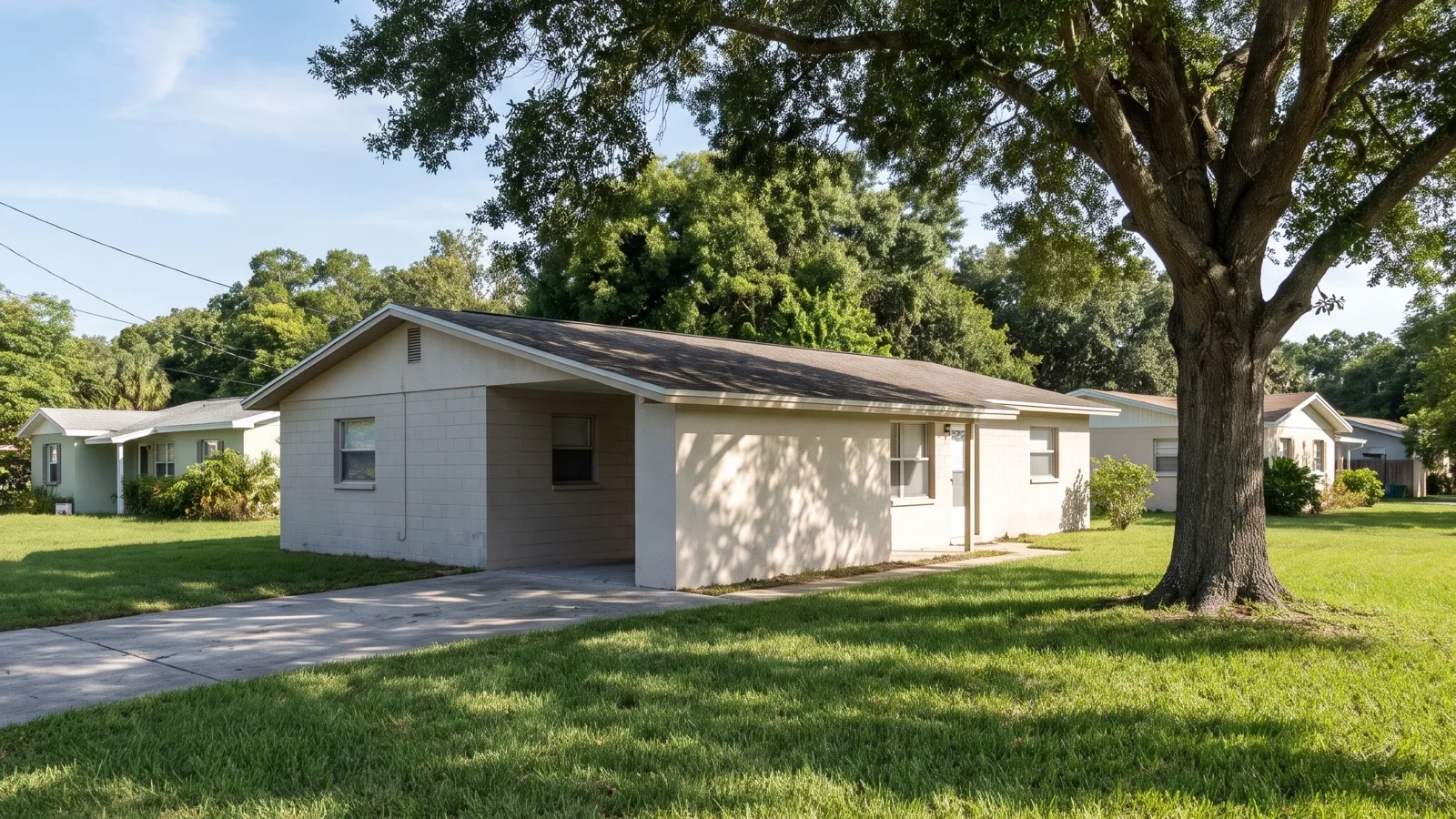
Protected homestead is exempt from forced sale by most creditors under Art. X, §4 of the Florida Constitution, and that protection inures to the surviving spouse or heirs. That is why it comes off the top of the §735.201(2) measure. It is not, however, exempt from the probate process. Fla. Stat. §733.607(1) provides that a personal representative has the right to take possession or control of the decedent’s property “except the protected homestead,” which tells you the property sits outside the ordinary administration machinery rather than outside the courthouse.
The determination is a separate proceeding. Fla. Prob. R. 5.405 allows an interested person to petition to determine the protected homestead status of real property, and subdivision (b) lists what the verified petition must state: the petitioner’s interest, the date of death, the county of domicile, whether the decedent died testate or intestate, whether there was a surviving spouse and whether that spouse waived homestead rights and how, the names of surviving descendants and whether there were minor children at the date of death, the legal description, whether the property was the decedent’s domicile or was in a municipality and the domicile of a family member, and how the property was titled at death. Rule 5.405(c) requires service on interested persons by formal notice.
Practically, a family that wants clean, insurable title to Florida real property usually needs that homestead order as well as the summary administration order. Title underwriters generally want the court’s determination in the record before a sale closes. Where the property is going to be sold, plan both filings at the same time rather than discovering the second one at the closing table.
When Summary Administration Is the Wrong Tool
Qualifying and being suited are different questions. Fla. Stat. §735.202 preserves the choice for a reason, and several situations point the other way.
There is litigation to bring. Fla. Stat. §768.20 provides that a wrongful death action “shall be brought by the decedent’s personal representative.” Summary administration appoints none. If the estate has a wrongful death claim, a survival action, or any lawsuit to prosecute or defend, the estate needs a fiduciary with letters.
The asset picture is incomplete. Rule 5.530(d) requires the order to designate the person to whom each asset is to be distributed. An account discovered six months later is not in the order, and the order does not reach it. That usually means a second filing.
Real property has to be sold to pay someone. A distribution order transfers title to the named recipients. It does not create authority in anyone to market, sign for, or convey the property on behalf of the estate, and it does not create a mechanism for applying sale proceeds to debts.
Creditors outweigh liquid assets. Section 735.206(2) requires provision for payment of known creditors to the extent assets are available, and §735.206(4)(e) makes recipients personally liable pro rata up to what they received. Where debts are close to or exceed the reachable assets, the ordered priorities and the protection of a formal administration are usually worth the added steps.
Someone is likely to contest. Consents are the currency of a summary administration. Where a beneficiary or an omitted person is expected to object, the formal track supplies the notice of administration under Fla. Stat. §733.212 and a defined objection period, which is a cleaner structure for a dispute.
| The order does | The order does not |
|---|---|
| Admit the will to probate, where there is one, under §735.206(1) | Appoint a personal representative or issue letters |
| Assign each listed asset to a named person, Rule 5.530(d) | Reach an asset that is not listed in it |
| Protect a payer or transfer agent who complies, §735.206(4)(b) | Give anyone authority to sell estate real property on the estate’s behalf |
| Give bona fide purchasers for value from the recipients property free of creditor claims and beneficiary rights, §735.206(4)(c) | Confer standing to bring a wrongful death action, §768.20 |
| Allow immediate distribution, §735.206(3) | Extinguish creditor claims; recipients remain liable pro rata, §735.206(4)(e) |
Nonresidents and the Neighboring Procedures
Summary administration sits among several abbreviated procedures, and choosing among them is often the first real decision in a case.
For a decedent who lived elsewhere but owned Florida property, §735.201 already permits summary administration of a nonresident’s estate. A separate route exists as well. Fla. Stat. §734.1025 covers a nonresident decedent’s testate estate with Florida property not exceeding $50,000 in gross value, and it allows the foreign personal representative to file an authenticated transcript of the foreign proceedings to have the will admitted here, provided the filing occurs before the expiration of 2 years after the death. That section also permits a notice to creditors to be served and published under chapter 733, with claims barred under §733.702.
Where there is no real property and the personal property is small, the disposition procedures may fit better. Fla. Stat. §735.301 permits payment or transfer without any administration where the estate consists only of §732.402 exempt property, property exempt from creditors’ claims under the State Constitution, and nonexempt personal property not exceeding the amount of preferred funeral expenses and the reasonable and necessary medical and hospital expenses of the last 60 days of the last illness. Fla. Stat. §735.304 supplies a parallel route for intestate estates with the $20,000 figure discussed above. Both are covered in our guides to the Florida small estate affidavit and to probate without administration, and the firm’s summary administration page describes how the firm handles these filings.
| Procedure | Authority | Ceiling | Real property |
|---|---|---|---|
| Summary administration | §§735.201 to 735.2063 | $150,000 after deductions, or no ceiling if death was more than 2 years ago | Yes, the order can distribute it |
| Disposition without administration | §735.301 | Nonexempt personal property not exceeding preferred funeral expenses plus last-60-days medical expenses | No |
| Disposition without administration, intestate | §735.304 | $20,000 plus preferred funeral expenses and last-60-days medical expenses | No |
| Nonresident testate estate, small Florida holdings | §734.1025 | $50,000 gross value in Florida, filed within 2 years of death | Addressed through admission of the foreign will |
| Formal administration | Chapter 733 | None | Yes, through the personal representative |
If the estate does not fit any of these, the answer is formal administration, and the practical questions become timing and cost rather than eligibility. Our guide to how long Florida probate takes covers the formal track in detail, and the summary versus formal comparison sets the two side by side.
Frequently Asked Questions
What is the summary administration limit in Florida in 2026?
$150,000. Fla. Stat. §735.201(2) provides that summary administration is available when the value of the entire estate subject to administration in Florida, less the value of property exempt from the claims of creditors, does not exceed $150,000. Chapter 2026-57, Laws of Florida, raised the figure from $75,000 effective July 1, 2026, and Fla. Prob. R. 5.530(a)(7) was amended on July 16, 2026 to match. The same subsection provides an alternative with no dollar limit where the decedent has been dead for more than 2 years.
Does the homestead count toward the $150,000 limit?
Generally no. The statute measures the estate subject to administration less the value of property exempt from the claims of creditors, and protected homestead is exempt from forced sale by most creditors under Art. X, §4 of the Florida Constitution. Exempt property under Fla. Stat. §732.402 comes off as well. That is why Fla. Prob. R. 5.530(a)(8) requires the petition to describe protected homestead and exempt property separately from the rest of the assets. Whether particular real property is protected homestead is a legal determination, and Fla. Prob. R. 5.405 provides the procedure for obtaining a court order on it.
How long does a summary administration take in Florida?
There is no statutory time frame. The steps that carry fixed periods are the 20 days a person served with formal notice has to serve written defenses under Fla. Prob. R. 5.040(a)(1), and, if a notice to creditors is published under Fla. Stat. §735.2063, the 3 months after first publication within which unknown creditors must file. Everything else depends on how quickly consents are gathered, how complete the petition is when filed, and the court’s calendar. The absence of an inventory, accountings, and a discharge petition is what makes the procedure shorter than formal administration, not a shorter statutory clock.
Can you do a summary administration without a lawyer in Florida?
The rule that requires counsel in Florida probate, Fla. Prob. R. 5.030(a), applies to every guardian and every personal representative unless the personal representative remains the sole interested person. A summary administration appoints no personal representative, so that rule does not by its terms reach a petitioner here. Fla. Prob. R. 5.530(a)(1) still requires the petition to state the name and office address of each petitioner’s attorney, and filing requirements are worth confirming with the clerk in the county of venue. The substantive question is separate from the filing question. The petition is verified, Fla. Stat. §735.206(2) puts a creditor duty on the petitioner before the order is entered, and §735.206(4)(e) leaves recipients personally liable for lawful claims up to the value each received.
Can an estate over $150,000 still use summary administration?
Yes, in two situations. First, if the decedent has been dead for more than 2 years, Fla. Stat. §735.201(2) imposes no value limit at all. Second, the ceiling applies to what remains after the statutory deductions, so an estate that is much larger on paper can still qualify. Assets that pass outside probate by survivorship, beneficiary designation, or trust title are not subject to administration, out-of-state property is not part of the Florida measure, and protected homestead and §732.402 exempt property are subtracted as property exempt from creditors’ claims.
Do creditors still get paid in a summary administration?
Yes. Fla. Stat. §735.206(2) requires the petitioner, before the order is entered, to make a diligent search and reasonable inquiry for known or reasonably ascertainable creditors, serve a copy of the petition on them, and make provision for payment to the extent assets are available. A creditor who was not served may enforce the claim and may recover reasonable attorney’s fees as an element of costs under §735.206(4)(d). Recipients are personally liable for a pro rata share of lawful claims, limited to the value each actually received, under §735.206(4)(e). After 2 years from the date of death, §735.206(4)(f) and §733.710 end that liability unless enforcement proceedings have been taken.
Can a formal administration be converted to a summary administration?
Fla. Stat. §735.2055 provides that a petition for summary administration may be filed at any stage of the administration of an estate if it appears that at the time of filing the estate would qualify. That matters in 2026, because an estate measured against the former $75,000 ceiling may sit below the current $150,000 ceiling. The estate still has to satisfy §735.201 as of the filing, including the requirement in a testate estate that the will not direct administration as required by chapter 733.
Is a summary administration a public record?
Yes. It is a court proceeding filed with the circuit court in the county of venue, and the petition, the will if one is admitted, and the order of distribution become part of the court file. Fla. Prob. R. 5.530(a)(2) limits the social security number in the petition to the last 4 digits. If a notice to creditors is published under Fla. Stat. §735.2063(1), that notice states the total value of the estate and the names and addresses of the people to whom the estate was assigned by the order, which is a further disclosure to consider before publishing.
This article describes Florida law as of August 2026 and is general information, not legal advice for any particular estate. Statutes and rules change, and the correct procedure depends on the facts of the estate. The MTM Law Firm PLLC handles probate matters throughout Florida from its office in Lakeland.